- Answer engine optimization (AEO) is the practice of structuring content so search engines, AI assistants and voice tools can lift it directly as the answer to a question.
- AEO rewards pages that answer first, in 40 to 60 words, then expand with evidence, steps and examples.
- Everything starts with real questions from search data, sales calls and communities, not keyword volume alone.
- Structure, schema, entity clarity and technical health decide whether your answer is eligible. Expertise decides whether it is chosen.
- Measure AEO with snippet ownership, AI Overview citations, AI mention rate and assisted conversions, not just rankings.
What is answer engine optimization (AEO)?
Answer engine optimization is the discipline of making your content the direct answer to a user's question. An answer engine is any system that responds with an answer instead of a list of links: Google's AI Overviews and featured snippets, People Also Ask boxes, voice assistants like Siri and Alexa, and AI chat tools such as ChatGPT, Perplexity, Gemini and Claude.
Classic SEO asks, "How do I rank on page one?" AEO asks a sharper question: "When someone asks about my topic, is my brand the one that gets quoted?" The difference matters because answer surfaces now sit above, or completely replace, the blue links. If an AI Overview answers the query, the click often never happens. If it cites you, you win visibility and trust even without the visit.
That is why what is AEO has become one of the most searched marketing questions in the last two years. The shift is measurable:
For B2B technology companies the stakes are higher than for consumer brands. Buyers research for weeks, ask detailed comparison questions and increasingly start that research inside an AI assistant. An AEO strategy makes sure your definitions, frameworks and product facts are the ones those assistants repeat.
AEO vs SEO vs GEO: what is the difference?
The three terms overlap, and teams waste time arguing about labels. Think of them as layers. SEO earns visibility in search results. AEO turns that visibility into direct answers. GEO (generative engine optimization) extends the work to large language models that write answers from many sources at once. You can read the full breakdown in our GEO vs SEO guide, and the companion GEO Playbook covers the generative side in depth.
| Dimension | SEO | AEO | GEO |
|---|---|---|---|
| Goal | Rank pages in search results | Be the extracted answer | Be named and cited in AI-written answers |
| Main surfaces | Organic blue links | Featured snippets, PAA, AI Overviews, voice | ChatGPT, Perplexity, Gemini, Claude, AI Mode |
| Unit of optimization | Page and keyword | Question and answer passage | Brand, entity and source footprint |
| Key signals | Relevance, links, technical health | Answer clarity, structure, schema | Citations, consistency, evidence, crawl access |
| Core metric | Rankings and organic clicks | Snippet and AI Overview ownership | AI mention rate and share of voice |
The practical takeaway: AEO is not a replacement for SEO. A page has to be crawlable, indexed and trusted before any answer engine will use it. AEO is the layer that makes a ranking page quotable.
How answer engines choose answers
Every answer engine runs some version of the same pipeline. Understanding it tells you exactly where your content can fail.
Interpret. The engine identifies what is being asked and which entities are involved. A query like "best SIEM for a mid-size SOC" contains a category (SIEM), a qualifier (mid-size) and an implied comparison intent.
Retrieve and rank. Candidate documents come from the engine's index. For Google that means normal crawling and indexing, which is why Google states there are no extra technical requirements for AI Overviews beyond being indexed and eligible to show a snippet. Ranking still leans on relevance, links and quality signals.
Extract. This is where AEO lives. The engine looks for a self-contained passage that answers the question cleanly. Pages that bury the answer in paragraph six, or wrap it in marketing language, lose here even when they rank.
Answer. The passage is displayed as a snippet, summarized in an AI Overview, read aloud by a voice assistant or blended into a chat response with a citation link.
AEO best practice 1: Lead with the answer
The single most important AEO best practice is also the simplest: put the answer first. Answer engines extract passages, and the passage that wins is usually the one that resolves the question in the first two or three sentences under a heading that mirrors the question.
Use the inverted pyramid. Open with a direct 40 to 60 word answer, then add context, steps, evidence and nuance underneath. The short answer serves the snippet and the AI Overview. The depth below it serves the reader who clicks, and signals to the engine that the page is genuinely expert.
Notice what the rewrite does. It names the entity, defines it in one sentence, states the benefit and previews what follows. An engine can lift the first sentence alone and it still makes sense. That is the test every key passage should pass: would this sentence answer the question if it were the only thing the user saw?
Answer formats that extract well
- Definitions: "X is a [category] that [does what] for [whom]."
- Yes or no questions: Start with "Yes" or "No," then explain in one sentence.
- How-to questions: A one-line summary followed by a numbered list of steps.
- Comparisons: A one-sentence verdict, then a table.
- Cost and time questions: A range with the main drivers, not "it depends."
AEO best practice 2: Research the real questions buyers ask
AEO is question-led, so your research has to be question-led too. Keyword volume tells you how many people search a phrase. It does not tell you the exact question they want answered or the follow-ups they ask next. Build a question bank from five sources:
Group questions by intent stage. Early-stage questions ("what is CSPM") belong on definitional guides and hubs. Mid-stage questions ("CSPM vs CNAPP") belong on comparison pages. Late-stage questions ("how much does a CNAPP cost", "does X integrate with Okta") belong on product, pricing and integration pages, where answering clearly can move a deal forward.
Finally, map every priority question to exactly one page. Two pages answering the same question split your signals and confuse extraction. This page-to-question map becomes the backbone of your AEO strategy.
AEO best practice 3: Structure content for extraction
Answer engines read structure before they read prose. Clean headings, short paragraphs, lists and tables make it easy for a system to find the passage that matches a question and lift it without losing meaning.
One overlooked detail is passage independence. An AI Overview might quote a single paragraph from the middle of your page. If that paragraph starts with "As mentioned above, it also..." it is useless out of context. Write each answer block so it names its subject and stands alone.
Tables deserve special attention in B2B. Pricing tiers, feature comparisons, integration lists and spec sheets are exactly the content buyers ask about, and tables are one of the formats engines extract most reliably for comparison snippets.
AEO best practice 4: Use schema markup to label your answers
Structured data does not guarantee an answer box, but it removes ambiguity. Schema tells machines what a page is, who wrote it, which organization stands behind it and how its parts relate. For AEO, the most useful types are Organization, Article with author details, FAQPage, Product or SoftwareApplication, BreadcrumbList and Person for your experts.
Be realistic about rich results. Since 2023 Google shows FAQ rich results mainly for well-known government and health sites, and HowTo rich results were retired. FAQPage markup is still worth adding where you have genuine Q&A content, because it gives every engine an unambiguous question and answer pair to read. Just do not add it expecting the visual dropdowns to appear in Google.
Three rules keep schema useful. Mark up only what is visible on the page. Keep it consistent with your on-page text. And validate it with Google's Rich Results Test and the Schema Markup Validator after every template change.
AEO best practice 5: Win featured snippets and AI Overviews
Featured snippets and AI Overviews are the two biggest answer surfaces on Google. They are related but not identical. A featured snippet quotes one source. An AI Overview writes a summary and links to several. How to optimize for AI Overviews comes down to the same foundations, plus a few extra habits.
Snippet formats and how to target them
| Format | Triggered by | What to write |
|---|---|---|
| Paragraph | What is, why, who | A 40 to 60 word definition right under a question heading |
| List | How to, steps, best | Numbered steps or ranked bullets with short labels |
| Table | Vs, compare, pricing, specs | An HTML table with clear column headers |
| AI Overview citation | Complex, multi-part questions | Comprehensive coverage of subtopics with clear, quotable passages |
For AI Overviews specifically, cover the whole question space. Overviews often answer the main query plus the two or three follow-ups people usually ask. Pages that address those follow-ups in clearly labeled sections give the engine more reasons to cite them.
Google also gives you controls. The nosnippet, max-snippet and data-nosnippet directives limit what can be shown. Most B2B brands should leave snippets open on educational content and only restrict them on gated or sensitive material.
What AI answers look like in Google
Google now has two AI answer surfaces, and they cite sources differently. Knowing what each looks like tells you what "winning" actually means on the page.
How it cites: AI Overviews appear above the organic results with a written summary, small link icons beside individual claims, and a set of source cards. A citation earns a link and a logo even when the user never scrolls. Google's guidance is that pages need to be indexed and eligible for a snippet. There is no separate AI Overview markup.
How it cites: AI Mode is a full conversational search experience. It breaks the question into many sub-searches, writes a longer answer and lists sources in a side panel and inline. Follow-up questions keep the context, so pages that cover the next question too keep getting cited as the conversation continues.
AEO best practice 6: Optimize for voice and conversational search
Voice assistants and AI chat changed how people phrase queries. Typed searches look like "SOC 2 checklist." Spoken and chat queries sound like "What do I need to do to pass a SOC 2 audit for the first time?" Conversational queries are longer, more specific and usually carry clear intent.
Voice answers are short, often a single sentence or two, and usually come from content that already wins a featured snippet. So voice optimization is mostly snippet optimization with a few additions:
- Write in natural language. Read your answer aloud. If it sounds awkward spoken, rewrite it.
- Target long-tail questions. Build FAQ sections around the full-sentence questions from your research.
- Answer follow-ups on the same page. Chat users rarely ask one question. Anticipate the next one.
- Keep local and entity data clean. For businesses with locations, consistent name, address and hours across listings drive many voice answers.
For most B2B tech brands, voice is a smaller channel than AI chat. But the habits it forces, short direct answers in plain language, improve performance on every answer surface.
AEO best practice 7: Build entity clarity and E-E-A-T signals
When an engine chooses between ten pages that all answer a question, trust decides. Google frames this as E-E-A-T: experience, expertise, authoritativeness and trust. AI systems reward the same signals because they are trying to avoid repeating wrong or unsupported claims.
Entity clarity is the AEO-specific part. Engines build a picture of who you are from your website, schema, knowledge panels, Wikipedia or Wikidata where applicable, LinkedIn, Crunchbase, G2 and press coverage. If your category description differs across those sources, engines hesitate to describe you confidently. Write one canonical description of your company and product category and use it everywhere.
Read our deep dive on E-E-A-T for B2B for a full checklist of on-site and off-site trust signals.
AEO best practice 8: Get technical AEO right
Great answers are invisible if engines cannot crawl, render and index them. Technical AEO overlaps heavily with technical SEO, with a few extra checks for AI systems.
- Indexability: Key answer pages return 200, are in your XML sitemap, are canonicalized correctly and are not blocked by robots.txt or noindex.
- Rendering: Important text is in the HTML, not injected late by JavaScript. Many AI crawlers do not execute JavaScript the way Googlebot does.
- Speed and stability: Fast, stable pages get crawled more often and keep users who click through.
- AI crawler access: Decide deliberately whether to allow crawlers such as GPTBot, OAI-SearchBot, PerplexityBot and Google-Extended. Blocking them can remove you from AI answers.
- Internal linking: Link from hubs to answer pages with descriptive anchor text so engines understand topical relationships.
- Freshness: Show visible "updated" dates and actually update content when facts change.
Run a quarterly technical audit. Our B2B SEO audit checklist covers the full list, and the SEO audit service turns it into a ranked fix list.
How to measure AEO
Rankings alone undercount AEO. A page can drop from position two to position four while winning the AI Overview citation that matters more. Track a small set of answer-level metrics alongside traditional SEO data:
| Metric | What it tells you | How to track |
|---|---|---|
| Featured snippet ownership | Share of priority questions where you hold the snippet | Rank tracker with SERP feature data |
| AI Overview citation rate | How often AI Overviews link to you for target queries | SERP feature tracking or manual sampling |
| AI mention rate | Share of prompts where AI assistants name your brand | AI visibility tools or a fixed prompt set |
| Share of voice | Your mentions compared to competitors | Same prompt set, scored by brand |
| Assisted conversions | Demos and signups influenced by answer pages | Analytics and CRM attribution |
| AI referral traffic | Visits from chatgpt.com, perplexity.ai and similar | Analytics referral reports |
Read the full stories from Palo Alto Networks and Cynomi, and see our guide on how to track your brand in AI search.
How to track AI Overviews in Search Console
For two years, AI Overview visibility was buried inside the normal Performance report, mixed with blue links and impossible to isolate. That changed on June 3, 2026, when Google introduced Search Generative AI performance reports in Search Console. It is the first time Google has given site owners first-party data on how their pages show up inside AI answers.
What the report shows
- Impressions inside generative AI features on Search, which covers AI Overviews and AI Mode, plus a separate view for AI features in Discover.
- Breakdowns by page, country, device and date, from hourly to monthly, so you can see which URLs AI answers use.
- Data from May 18, 2026 onward. There is no historical backfill, so start your baseline now.
What it does not show (yet)
- It does not separate AI Overviews from AI Mode. Both sit in one Search view.
- It focuses on impressions, so you still need analytics to connect AI visibility to clicks and pipeline.
- It is still rolling out in beta, so some properties will not see it yet.
Google also added a control that lets sites opt their content out of AI Overviews, AI Mode and Discover AI features, and has said opting out is not used as a ranking signal for regular results. For most B2B brands the exposure is worth more than the opt-out.
A 90-day AEO strategy
An AEO strategy does not need a year to show results. Most of the early wins come from fixing pages you already have. Here is the plan we run with B2B teams:
After 90 days, move into a monthly rhythm: refresh what slipped, answer new questions from sales, and expand into the generative side with the GEO Playbook.
AEO for B2B: the page types that win answers
Consumer AEO guides focus on recipes and how-tos. B2B buyers ask different questions, and a handful of page types consistently capture the answers that influence pipeline. If you are building an AEO strategy for a SaaS or cybersecurity company, prioritize these six:
AEO by funnel stage
Map your question bank to these stages so every part of the buyer journey has a page built to be the answer:
| Stage | Example question | Best page type | Answer format |
|---|---|---|---|
| Problem aware | Why are our security alerts so noisy? | Guide or hub article | Short answer, then causes list |
| Solution aware | What is a SOAR platform? | Glossary or pillar page | 40 to 60 word definition |
| Evaluating | SOAR vs SIEM: which do I need? | Comparison page | Verdict sentence plus table |
| Shortlisting | Best SOAR tools for mid-size teams | Category page, third-party lists | Ranked list with criteria |
| Deciding | Does [vendor] integrate with Splunk? | Integration page or docs | Yes or no, then how |
Most B2B sites are heavy on stage one and thin on stages three to five, which is exactly where answers influence revenue. Close those gaps first.
The AEO workflow: tools and team
AEO is not a one-time project. The teams that win answers consistently run a simple, repeatable workflow with clear owners. Here is the operating model we recommend for B2B marketing teams of any size.
Write the answer first. The most effective habit we have seen is drafting the 40 to 60 word target answer at the brief stage, before the outline exists. It forces clarity on what the page must say, keeps writers from drifting into generic intros, and gives reviewers a concrete standard to check against.
Who owns what
- SEO or content lead: owns the question bank, priorities and measurement.
- Subject-matter experts: supply first-hand detail, review accuracy and lend their bylines.
- Writers: turn expert input into answer-first, well-structured pages.
- Web or dev team: maintains schema templates, rendering, speed and crawler rules.
- Sales and support: feed real buyer questions into the bank every week.
Recommended tool stack
| Job | Tools |
|---|---|
| Question research | Search Console, Ahrefs or Semrush question filters, AlsoAsked, sales call recordings |
| SERP feature tracking | A rank tracker with featured snippet and AI Overview data |
| AI answer tracking | An AI visibility tool or a scripted prompt set across assistants |
| Schema | CMS templates, Rich Results Test, Schema Markup Validator |
| Technical health | A site crawler, server logs for bot activity, Core Web Vitals reports |
Small teams can run this with a spreadsheet and a few hours a week. Larger teams usually formalize it into a monthly AEO review alongside their SEO and GEO reporting.
AEO checklist
Work through this list page by page. Your progress is saved in your browser so you can come back to it.
Common AEO mistakes to avoid
Answer engine optimization FAQ
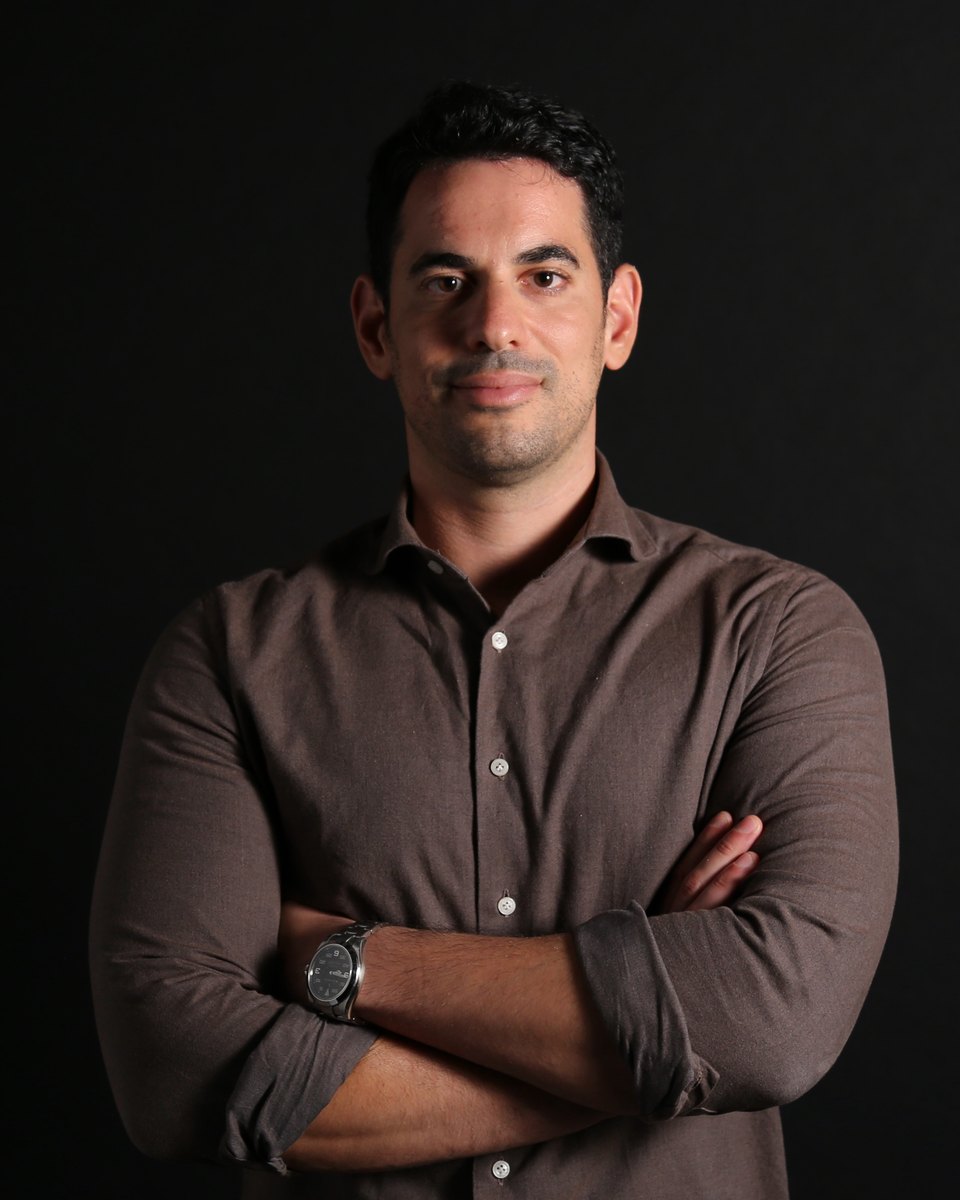
Co-founder and growth expert at OGAI. Amit builds search and AI visibility programs for B2B technology companies, from content hubs to AI answer strategy.

Co-founder and SEO lead at OGAI. Dave has led technical SEO and content strategy for B2B security brands including LayerX through its Akamai acquisition.